The knee is one of the body’s hardest-working joints, making it particularly vulnerable to pain, injury, and age-related wear over time. It can develop suddenly following an injury or gradually over time due to repetitive loading, physical activity, age-related changes, or underlying conditions. Because the knee plays a crucial role in walking, running, climbing stairs, and daily movement, knee pain can significantly affect comfort and function.
At Move for Life, we provide personalised knee pain treatment services designed to assess the underlying causes of your symptoms and support your rehabilitation through an evidence-informed physiotherapy approach.
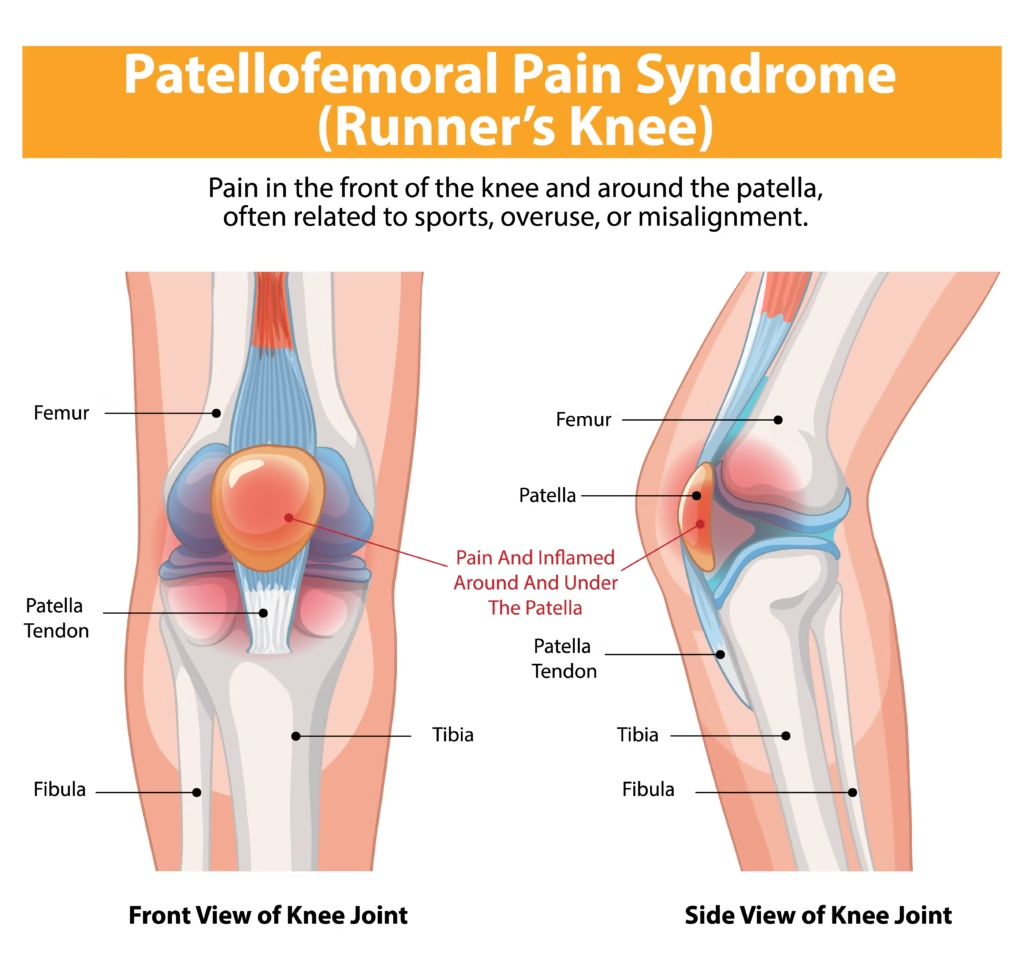
The knee is a complex joint made up of bones, cartilage, ligaments, tendons, muscles, and other soft tissues. Pain may originate from one or several of these structures.
Common causes of knee pain may include:
Symptoms can vary widely depending on the underlying cause.

People seeking knee pain treatment may experience:
A thorough assessment helps determine the factors contributing to these
symptoms.
At Move for Life, assessment begins with understanding your symptoms, activity levels, lifestyle, and goals.
Your physiotherapy assessment may include:
Understanding how symptoms developed provides important information for clinical decision-making.
Assessment of joint movement, muscle strength, flexibility, and function helps identify contributing factors.
Walking, squatting, balance, and functional movement assessments may be performed to evaluate biomechanics.
Your treatment plan is tailored according to your individual needs, activity requirements, and recovery goals.
Effective knee pain treatment focuses on addressing symptoms while
supporting long-term function and movement.
Treatment approaches may include:
Targeted exercises may be prescribed to improve strength, mobility, balance, and movement control.
Temporary adjustments to work, exercise, or sporting activities may help manage symptoms while maintaining appropriate activity levels.
Where clinically appropriate, hands-on physiotherapy techniques may be incorporated as part of an overall management plan.
Understanding your condition can support informed decision-making and long-term symptom management.
A structured rehabilitation plan can help guide your return to work, sport, or recreational activities.
Our team takes a personalised approach to knee pain treatment in Melbourne, recognising that every individual presents with different symptoms, goals, and activity demands.
We work collaboratively with you to:
Our focus is on helping you move more comfortably and confidently through evidence-informed physiotherapy care.
Experiencing ongoing knee pain? Contact Move for Life to arrange a physiotherapy assessment.
Knee pain can arise from various conditions including tendon injuries, ligament injuries, osteoarthritis, overuse injuries, and biomechanical factors. A professional assessment can help determine the likely cause.
You may benefit from assessment if pain persists, affects daily activities, limits exercise participation, or is accompanied by swelling or instability.
Physiotherapy may assist in managing many types of persistent knee pain through assessment, education, exercise prescription, and activity modification. The most appropriate management approach will depend on your individual presentation.
Recovery time varies depending on the underlying condition, severity of symptoms, and individual factors.
Not everyone requires imaging. A physiotherapist can help determine whether referral for further investigation may be appropriate based on your presentation.
