A rolled ankle can happen in an instant, but its effects can last much longer if not managed properly. At Move for Life Physio, we provide specialised rolled ankle treatment Melbourne residents can access for assessment, pain management, and recovery support. Whether your injury is mild or severe, early intervention is key to preventing complications and restoring full mobility.
A rolled ankle, often referred to as an ankle sprain, occurs when the ligaments supporting the ankle are stretched or torn. It can cause pain, inflammation, a feeling of instability, and challenges with walking. Our approach to rolled ankle treatment in Melbourne focuses on identifying the severity of the injury and creating a personalised recovery plan that supports healing while maintaining strength and function.
Every injury is different, which is why this treatment begins with a thorough assessment. We evaluate ligament damage, joint stability, and movement patterns to determine the best course of action. This ensures that your treatment is tailored specifically to your needs, helping you recover safely and efficiently.

Our physiotherapy programs are designed not only to relieve pain but also to rebuild strength and stability. Through a combination of manual therapy, guided exercises, and mobility work, our rolled ankle treatment in Melbourne aims to support recovery and reduce the risk of further injury. We focus on restoring balance, coordination, and confidence in movement.
One of the most common issues with ankle injuries is re-injury due to incomplete rehabilitation. Our rolled ankle treatment in Melbourne includes education and strengthening strategies to ensure your ankle is fully supported during daily activities and sports. By addressing the root cause and improving joint stability, we help you avoid recurring issues.
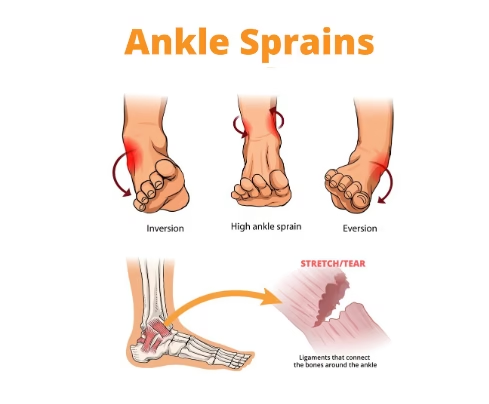
Don’t let an injured ankle slow you down. Access rolled ankle treatment Melbourne patients can consider for effective support and long-term recovery. Contact Move for Life Physio today to start your journey back to pain-free movement.
Recovery time varies depending on the severity of the injury and how early the patient starts treatment. Most individuals improve in 6–12 weeks, but it can take more time for recovery from chronic conditions.
In most cases, it is best to steer clear of high-impact activities until you are evaluated by a physiotherapist.
When a tendon is irritated and inflamed at the start of an injury, it’s called tendonitis. Tendinopathy is a broader term that includes chronic degeneration of the tendon tissue.
Most cases respond well to non-surgical tendonitis treatment. If physiotherapy doesn’t help, surgery may be the next step.
Yes. Strengthening, flexibility training, and biomechanical corrections can significantly reduce your risk of having future tendon problems.
